
Contents
- 🎵 Origins & History
- ⚙️ How It Works
- 📊 Key Facts & Numbers
- 👥 Key People & Organizations
- 🌍 Cultural Impact & Influence
- ⚡ Current State & Latest Developments
- 🤔 Controversies & Debates
- 🔮 Future Outlook & Predictions
- 💡 Practical Applications
- 📚 Related Topics & Deeper Reading
- Frequently Asked Questions
- References
- Related Topics
Overview
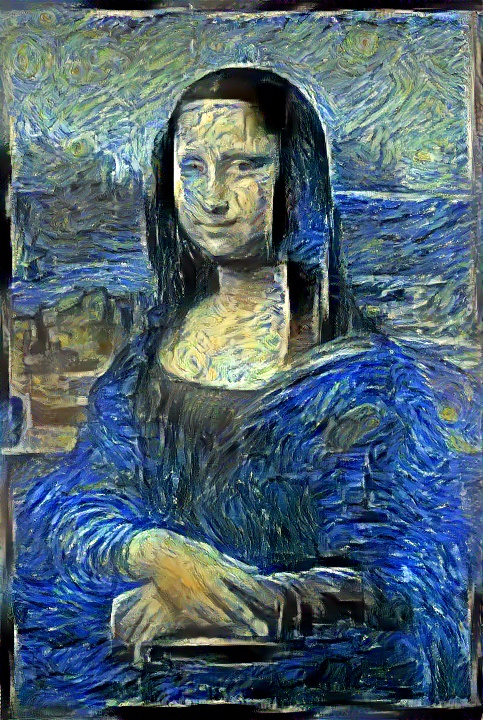
Neural Style Transfer (NST) techniques leverage deep learning algorithms to merge the content of one image with the stylistic elements of another, creating visually stunning artwork. By utilizing convolutional neural networks (CNNs), NST has revolutionized digital art, allowing users to apply the aesthetics of famous artists like Vincent van Gogh or Pablo Picasso to their own photographs. This technology gained significant traction with the rise of mobile applications such as Prisma and DeepArt, which democratized access to advanced image manipulation. As of 2024, NST continues to evolve, with applications expanding into video processing and real-time rendering, prompting discussions around the ethics of AI-generated art and the implications for traditional artists.
🎵 Origins & History
Key figures in the development of Neural Style Transfer include Leon Gatys, DeepArt, and Prisma. These individuals and organizations have played crucial roles in advancing the technology and making it accessible to a broader audience, thus fostering a new wave of creativity in digital art.
⚙️ How It Works
Notable frameworks like TensorFlow and PyTorch have facilitated the implementation of NST, making it accessible for developers and artists alike.
📊 Key Facts & Numbers
Companies like NVIDIA are exploring real-time rendering capabilities, pushing the boundaries of what is possible with NST. Additionally, academic research continues to refine the algorithms, improving efficiency and output quality, indicating a vibrant future for this technology.
👥 Key People & Organizations
Critics argue that NST can devalue traditional art forms by commodifying creativity. The debate extends to the ownership of AI-generated art, with legal frameworks struggling to keep pace with technological advancements. Proponents, however, argue that NST democratizes art creation, enabling individuals without formal training to express themselves creatively. This ongoing discourse highlights the tension between innovation and tradition in the art world.
🌍 Cultural Impact & Influence
Experts predict that advancements in machine learning will lead to even more sophisticated algorithms capable of understanding and replicating complex artistic styles. The integration of NST with augmented reality (AR) and virtual reality (VR) technologies could further transform how we experience art, allowing for immersive and interactive artistic expressions. As these technologies evolve, the conversation around ethics and authorship will likely intensify, shaping the landscape of digital art in the years to come.
⚡ Current State & Latest Developments
Platforms like Canva and Artbreeder have made it easier for anyone to experiment with NST, further bridging the gap between technology and artistic expression.
🤔 Controversies & Debates
Related topics to explore include Generative Adversarial Networks, which share foundational principles with NST, and deep learning, the broader field that encompasses these techniques. Additionally, examining the intersection of AI and ethics in art can provide deeper insights into the implications of technologies like NST. For those interested in the practical aspects, exploring tools and frameworks such as TensorFlow and PyTorch can offer a hands-on approach to understanding and implementing NST.
Key Facts
- Year
- 2024
- Origin
- Global
- Category
- technology
- Type
- technology
Frequently Asked Questions
What is Neural Style Transfer?
Neural Style Transfer (NST) is a technique that uses deep learning algorithms to merge the content of one image with the style of another, creating unique artworks. The method relies on convolutional neural networks to analyze and synthesize images, allowing users to apply artistic styles from famous works to their own photographs. Popular applications like Prisma and DeepArt have made NST accessible to a wide audience, transforming how art is created and consumed.
How does Neural Style Transfer work?
NST works by utilizing deep convolutional neural networks to extract features from both a content image and a style image. The algorithm minimizes the difference between the generated image and the representations of content and style, resulting in a new image that combines both elements.